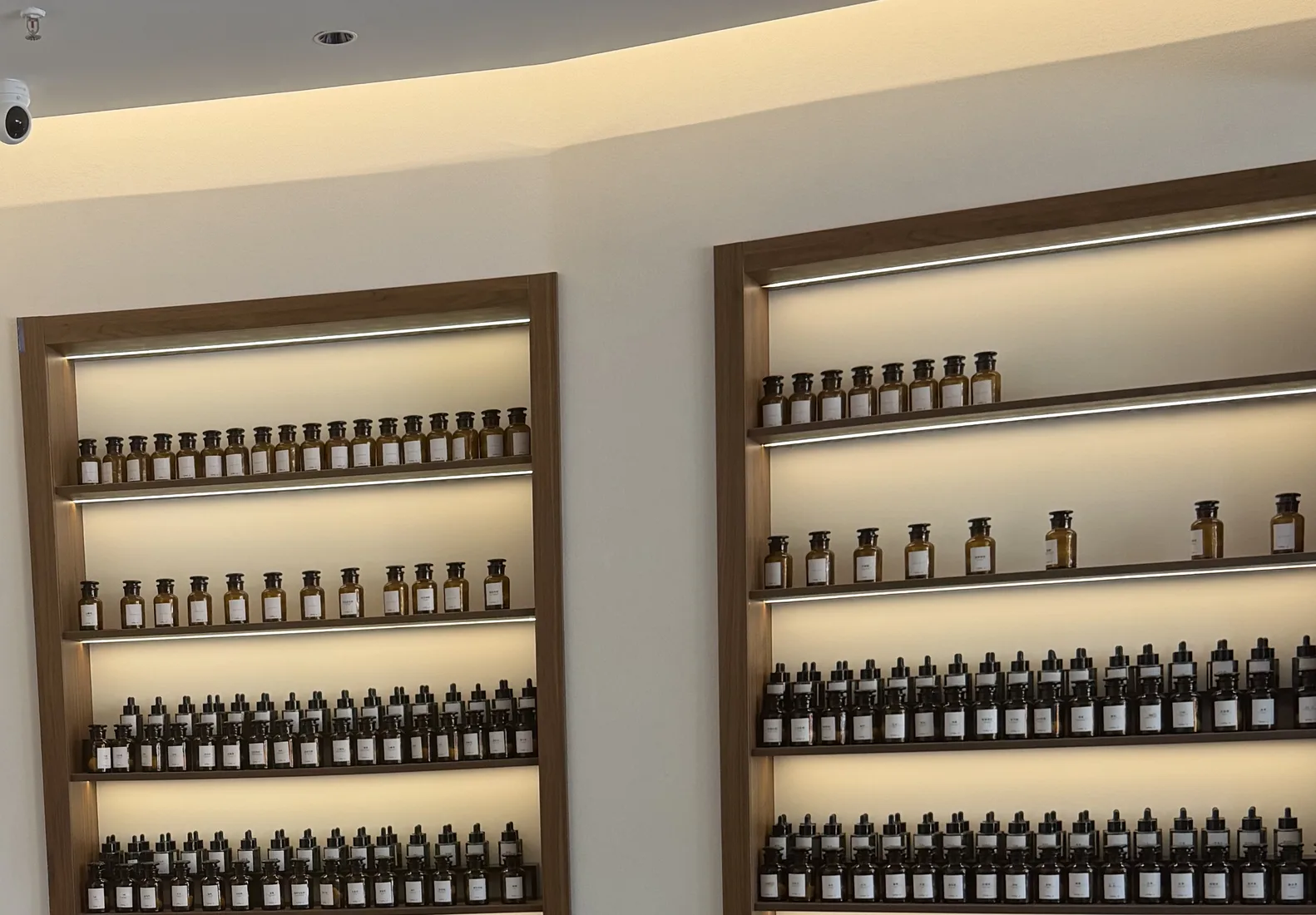
A perfume sample is a decision tool. Its job is not only to smell pleasant; it must help the buyer decide whether a defined fragrance direction is ready to become a production specification.
Unstructured evaluation leads to vague feedback, repeated rounds and version confusion. A short, controlled review is more useful than a long discussion based on memory.
Before opening the shipment
Check the sample label and accompanying message. You should be able to identify the project, fragrance code or version, concentration if applicable and date. Photograph the received labels if several samples are being reviewed by different people.
After transport, allow samples to return to a stable room temperature. If a vial has leaked, the sprayer is damaged or the liquid looks materially different from the documented sample, record it before evaluation.
Set up a fair comparison
Use neutral blotters, a clean room and consistent application. Label the blotter before spraying. If comparing a reference with a proposal, use the same number of sprays, distance and timing.
Avoid testing immediately after using another fragrance, smoking, cooking or entering a heavily fragranced space. Review a manageable number of samples and take breaks to reduce fatigue.
A fresh proposal should not be judged against a reference blotter sprayed several hours earlier. Start both on the same timeline.
Use four evaluation checkpoints
Immediate brightness, sharpness, alcohol impression and first recognition.
How quickly the opening settles and whether the structure remains coherent.
The central floral, aromatic, fruity, spicy or woody character.
Residual character, balance, cleanliness and persistence.
Record the actual time at each checkpoint. The precise intervals depend on the fragrance, but using the same schedule for every version makes feedback comparable.
Write actionable feedback
Separate three questions:
- Direction: Is this the right olfactive family and overall character?
- Balance: Which part is too strong, weak, sweet, dry, bright, dark, clean or heavy?
- Commercial fit: Does it suit the intended market, user, season and price position?
Name the stage where the difference appears. “The opening is close, but the heart becomes sweeter and the dry-down feels heavier than the reference” is much more actionable than “make it more similar.”
Consolidate internal feedback before sending it to the factory. Five people sending conflicting comments separately will not produce a clear revision brief.
Create an approval record
When the direction is approved, record the exact sample code and version. Confirm whether the approval includes only the fragrance direction or also the concentration, liquid colour and other visible properties.
Do not approve one vial verbally and then order under another code. The approved reference should remain identifiable during production and quality review.
What fragrance sample approval does not cover
Fragrance approval does not automatically approve:
- Bottle, pump, gasket or cap compatibility.
- Label adhesion, printing, coating or foil performance.
- Carton fit and insert protection.
- Long-term stability in the selected pack.
- Destination-market safety assessment and labelling.
- Transport classification and shipping preparation.
Those decisions should be connected to the approved fragrance but verified through their own production and compliance steps.
Move from sample to specification
Before the production quotation is finalized, connect the approved sample to concentration, fill volume, quantity, bottle, sprayer, cap, decoration, label, carton, insert and destination. That complete specification is what the factory can cost, schedule and inspect.
Related primary references
This guide describes a practical sensory workflow. Testing and documentation requirements for a finished cosmetic product must be determined separately for the formula and target market.